How to Prepare for DP-800: A Step-by-Step Study Guide

The DP-800 SQL AI Developer Associate certification is one of the most popular data certifications right now. It covers both classic SQL development concepts and modern AI capabilities. That's a very appealing combination for many practitioners and fits the modern job market requirements as well. SQL is not going anywhere, but at the same time, adapting to AI is becoming a necessity.
This exam is not an entry-level introduction. You are required to understand how to design and develop robust database solutions. This includes security and performance optimization, CI/CD processes, and integrating modern AI capabilities. The scope is broad, and according to the data community, the exam is on the harder side. That's why instead of an endless list of resources, you need a structured plan.
Should you choose DP-800?
DP-800 is an especially good choice if you're already somewhat experienced with SQL, and want to bridge the gap between traditional SQL development and modern AI solutions. Some relevant roles include but are not limited to database developer, data engineer, and DBA.
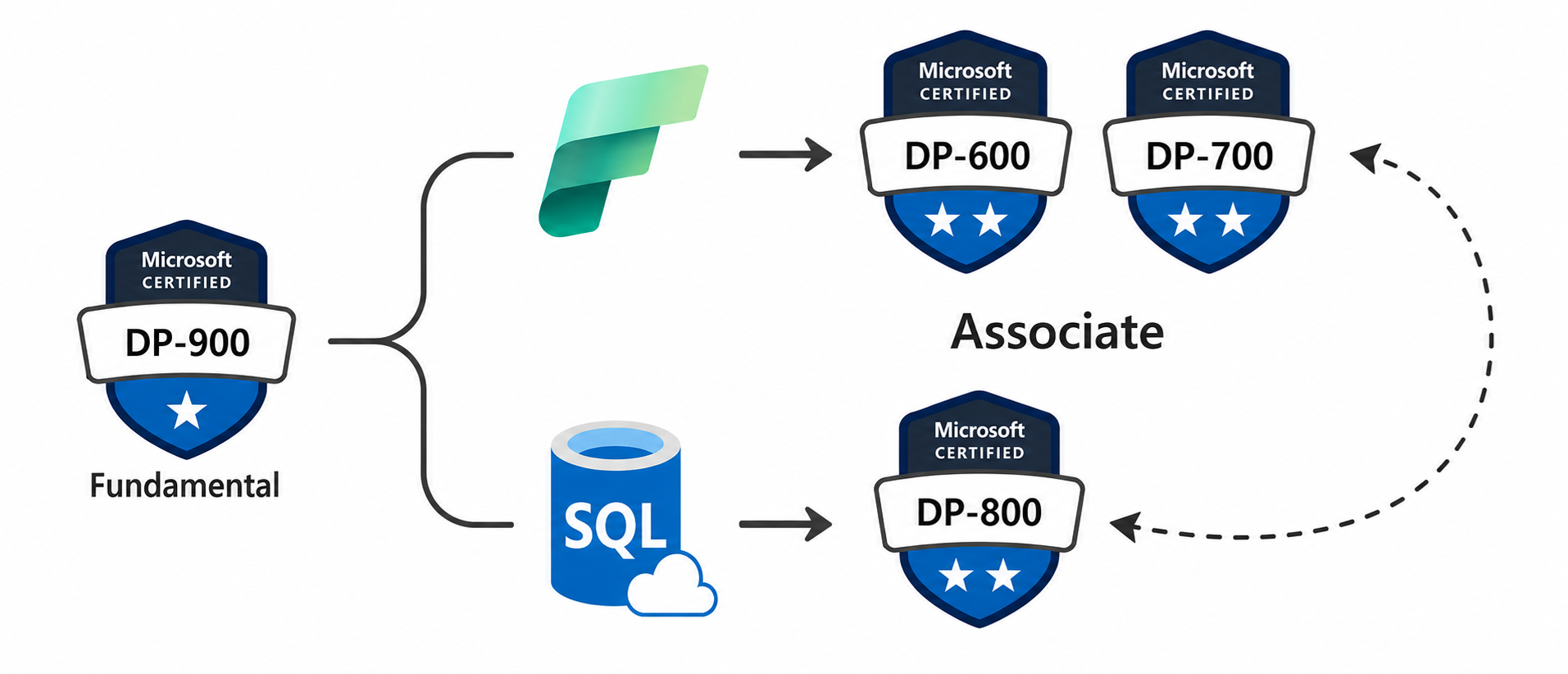
The certification is also relevant if you're working with applications that use SQL databases. Some of the skills are also very useful for working with Microsoft Fabric if that's something you're interested in. However, if Microsoft Fabric is your focus, you should consider DP-700 and DP-600 certifications first.
If you're new to the Microsoft ecosystem or data concepts in general, this exam might be too advanced. In that case, I recommend starting with DP-900 which covers Azure data fundamentals.
What does DP-800 test?
As with other Microsoft exams, the topics are split into different core areas. DP-800 covers three areas with nearly equal weight:
Design and develop database solutions (35-40%):
- Design and implement database objects. Covers topics like tables, data types, indexes, specialized tables, JSON columns, database constraints, and partitioning.
- Implement programmability objects. Covers topics like views, scalar functions, stored procedures, and triggers.
- Write advanced T-SQL code. Covers topics like CTEs, window functions, JSON functions, regular expressions, fuzzy matching, and error handling.
- Design and implement SQL solutions by using AI-assisted tools. Covers topics like security impact of using AI tools, enabling GitHub Copilot, configuring MCP, and creating instruction files.
Secure, optimize, and deploy database solutions (35-40%):
- Implement data security and compliance. Covers topics like data encryption, data masking, RLS, OLS, database access, and endpoints.
- Optimize database performance. Covers topics like database configurations, transaction isolation levels, evaluating query execution plans, and resolving performance issues.
- Implement CI/CD by using SQL Database Projects. Covers topics like testing strategies, source control, database models, detecting schema drift, and deploying changes.
- Integrate SQL solutions with Azure services. Covers topics like DAB configuration files, configuring REST & GraphQL endpoints, exposing database objects, monitoring configurations, and handling changes.
Implement AI capabilities in database solutions (25-30%):
- Design and implement models and embeddings. Covers topics like evaluating, creating, and managing external models, choosing embedding maintenance method, designing and implementing chunks, and generating embeddings.
- Design and implement intelligent search. Covers topics like full-text search, designing for vector data, vector search, hybrid search, RRF, and evaluating performance of vector and hybrid search.
- Design and implement retrieval-augmented generation. Covers topics like identifying use cases, creating prompts, converting structured data to JSON, and extracting responses.
If DP-800 still sounds like the right certification for you, let's move on to the study guide.
My recommended DP-800 study strategy
For the best results, follow the steps in order. We'll start by understanding the target, then learn the required skills, test knowledge, close any gaps, and finish with final exam prep.
Study plan at a glance
- Book the exam and create a deadline
- Read the official study guide
- Complete the official Microsoft Learn course
- Watch the Microsoft Reactor DP-800 series
- Use CertiAce to test your knowledge
- Go through the official study guide again
- Get hands-on practice
- Learn what to expect on exam day
- Take the official Microsoft Practice Assessment
- Time to take the exam
1. Book the exam and create a deadline
This is more important than people often realize. Changing your approach from "I'll take the exam when I'm ready" to "I'll take the exam in X weeks" creates a sense of urgency and makes it easier to build your weekly plan.
It's important to choose a realistic date that will push you to study, but doesn't overwhelm you. If you already have experience with SQL and can study consistently, 1-2 months may be a reasonable estimate. If your day job takes most of your time or the advanced topics are new to you, give yourself more time. In the end, it heavily depends on how much time you can spend on studying.
You can schedule the exam here. Scroll all the way down, and remember to select the correct currency before clicking the Schedule exam button.
Microsoft occasionally runs campaigns offering free exam vouchers. Those often come with limited availability, light requirements, and a deadline. I share information about these campaigns on LinkedIn and this site's newsletter.
2. Read the official study guide from beginning to end
Before diving into any actual learning content, read the official DP-800 study guide.
The official study guide always provides the latest comprehensive list of skills measured. You'll also find when the exam was last updated. Currently the latest update is dated March 12, 2026.
The study guide is often overlooked, but it's the most important resource you need to pass the exam. It works as a checklist when getting started, and also when finalizing your exam preparation. If you encounter a topic you've never heard of before, I recommend asking an LLM of your choice for a short high-level summary.
Below is an interactive PDF that can be used to map your current knowledge and track your progress. Each topic can be tagged as Comfortable, Familiar, or New. Remember to download a copy after filling out the form to save your changes.
If you notice the PDF to be outdated, I'd really appreciate it if you let me know so I can update it.
3. Complete the official Microsoft Learn course
Next, complete the official Microsoft Learn course for DP-800. The course consists of three learning paths and eleven modules.
- Design and develop database solutions - 7 hours 11 minutes, 4 modules
- Secure, optimize, and deploy database solutions - 7 hours 31 minutes, 4 modules
- Implement AI capabilities in database solutions - 3 hours 40 minutes, 3 modules
The estimated duration of going through the course is a bit over 18 hours. The estimate does not include stopping and taking notes, repeating hard sections, or reading the related documentation.
- Take notes to reinforce your learning
- Read related documentation to learn more about the topics
- Flag hard areas that require more attention
- Do not skip exercises - they are the most important part of the course
4. Watch the Microsoft Reactor DP-800 series
After completing the Microsoft Learn course, watch the Microsoft Reactor DP-800 certification series. The series includes a technical session for each learning path, and a bonus session focused on building with the tools.
The speakers explain how the topics connect and what they mean in practice. This is especially useful after completing the Microsoft Learn course as you're already familiar with the topics and can focus on the explanations and practical examples.
- Take notes
- Pause or rewind when needed
- Return to relevant Microsoft Learn module if a topic comes up you're not yet comfortable with
5. Use CertiAce to test your knowledge
Once you have completed the official learning path and complementary videos, benchmark your knowledge in CertiAce. CertiAce offers limited free questions and a more comprehensive paid plan.
Practice questions have more than one purpose.
Firstly, they test what you know and help discover your weak areas. Secondly, they help you get into the mindset of scenario-based questions - just like you're going to face in the exam itself.
Paid promotion: CertiAce
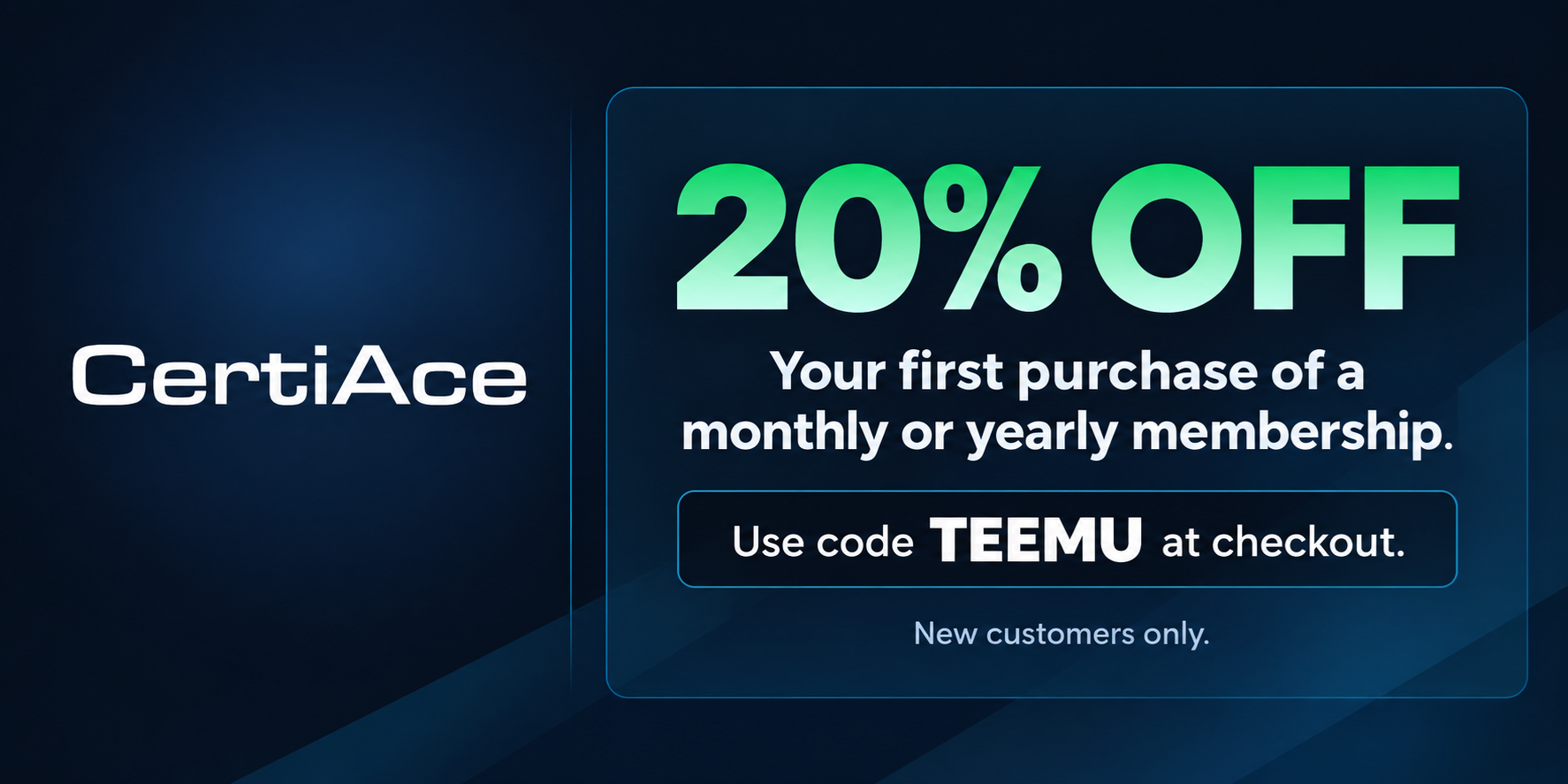
If you’ve been following my content for a while, you may have seen me recommend CertiAce even before this partnership. Now I can also offer you a personal discount code. I may earn a commission from purchases made using the code.
6. Go through the official study guide again
Now is the time to review what you've learned and identify the topics that still need attention. Return to the official DP-800 study guide or your PDF checklist if you chose to use it.
Go through the list again. For each topic, try to explain the fundamental concepts as if you were presenting them to someone else.
- Can you explain the topic in your own words?
- When would this feature or approach be useful?
- What alternatives are available?
Flag the topics that need more practice. That's what you're going to do next.
7. Get hands-on practice
You've studied hard, benchmarked your knowledge, and hopefully completed some exercises in the Microsoft Learn modules. Now it's time to focus on hands-on practice. The best way to prepare for scenario-based exam questions is to build things yourself.
In the previous step, you identified your weak spots. These are the topics you should focus on. You can revisit the Microsoft Learn exercises for specific topics. The best option is still to create something yourself.
There's no need to build a production-ready end-to-end solution. Build something small. Create a database and get creative. Load some data into it, write queries, configure security, and experiment with different search options. The database is your oyster.
You can get some ideas from Microsoft's GitHub repo.
8. Learn what to expect on exam day
Especially if this is your first Microsoft certification exam, watch this Microsoft Reactor session: Prepare for Exam Day.
Learning the technical content is the most important part of your preparation. However, going into an unfamiliar exam format can still catch you by surprise. You should understand the different question formats, how to manage your time, how to review your answers, and how to effectively use Microsoft Learn.
You can also visit Microsoft's exam sandbox to explore the interface and different question types.
9. Take the official Microsoft Practice Assessment
Finish your preparation with the official Practice Assessment. Scroll down to DP-800 and you'll be able to access the assessment.
I strongly recommend saving this assessment for last. This is the final benchmark, and as close as you can get to the style of real exam questions. The assessment is free, and can be attempted multiple times.
Be advised that the question pool is limited. Repeating the assessment too quickly can turn it into a memory game. After each attempt you should:
- Carefully review wrong answers
- Read the relevant documentation
- Get more practice on topics that still need work
10. Time to take the exam
This is it. You've done the work. You've studied the topics, tested your knowledge, closed the gaps, and gained hands-on experience. Now it's time to take the exam. Trust your preparation and believe in yourself, and you'll do great!
If this guide helped you reach your goal, I'd be happy to hear about it. Feel free to tag me in your LinkedIn post when you pass so I can congratulate you.
Good luck!