How to Prepare for DP-600: A Step-by-Step Study Guide

The DP-600 Fabric Analytics Engineer Associate certification is one of the main role-based Microsoft Fabric certifications. It covers preparing and enriching data for analysis, securing and maintaining analytics assets, and implementing and managing semantic models. That's a very appealing combination for people who work between the data platform and Power BI sides of Microsoft Fabric.
This exam is not an entry-level introduction. You are required to understand how to design, create, and manage analytical assets such as semantic models, warehouses, and lakehouses. This includes security and governance, development lifecycle, querying and transforming data, and semantic model design and optimization. The scope is broad, and that's why instead of an endless list of resources, you need a structured plan.
Should you choose DP-600?
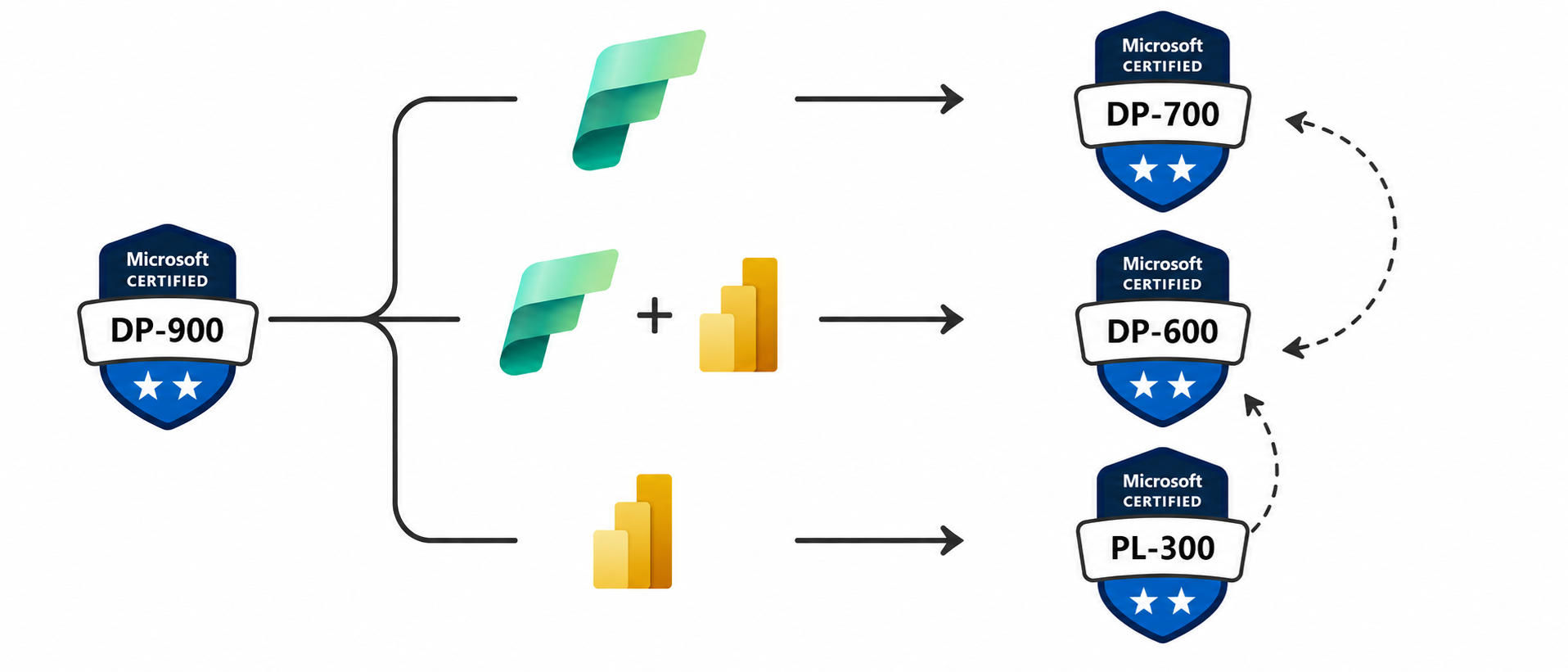
DP-600 is an especially good choice if you're already somewhat experienced with Power BI and want to extend your scope to Microsoft Fabric. Some relevant roles include but are not limited to data analyst, analytics engineer, BI developer, and data consultant. This certification is especially relevant if you're working with semantic models, lakehouses, warehouses, Direct Lake, and DAX.
However, if data engineering is your main focus, you should consider DP-700 first. If your work is primarily focused on Power BI reporting and analytics and you don't yet need the wider Microsoft Fabric scope, PL-300 might be a better starting point.
If you're new to the Microsoft ecosystem or data concepts in general, this exam might be too advanced. In that case, I recommend starting with DP-900 which covers Azure data fundamentals.
What does DP-600 test?
As with other Microsoft exams, the topics are split into different core areas. DP-600 covers three areas, with preparing data carrying the most weight:
Maintain a data analytics solution (25-30%):
- Implement security and governance. Covers topics like workspace-level and item-level access, row-level, column-level, object-level, and file-level access controls, sensitivity labels, and endorsements.
- Maintain the analytics development lifecycle. Covers topics like version control, Power BI Desktop projects, deployment pipelines, impact analysis, XMLA endpoint, and reusable Power BI assets.
Prepare data (45-50%):
- Get data. Covers topics like data connections, OneLake catalog, Real-Time hub, choosing between data stores, ingesting or accessing data, and OneLake integration.
- Transform data. Covers topics like views, functions, stored procedures, star schemas, denormalization, aggregations, joins, data quality, data types, and filtering.
- Query and analyze data. Covers selecting, filtering, and aggregating data by using the Visual Query Editor, SQL, KQL, and DAX.
Implement and manage semantic models (25-30%):
- Design and build semantic models. Covers topics like storage modes, star schemas, relationships, DAX calculations, calculation groups, dynamic format strings, field parameters, large semantic model storage format, and composite models.
- Optimize enterprise-scale semantic models. Covers topics like query and report performance, DAX performance, Direct Lake configuration, choosing between Direct Lake options, and incremental refresh.
If DP-600 still sounds like the right certification for you, let's move on to the study guide.
My recommended DP-600 study strategy
For the best results, follow the steps in order. We'll start by understanding the target, then learn the required skills, test knowledge, close any gaps, and finish with final exam prep.
Study plan at a glance
- Book the exam and create a deadline
- Read the official study guide
- Complete the official Microsoft Learn course
- Watch Aleksi Partanen's DP-600 playlist
- Use CertiAce to test your knowledge
- Go through the official study guide again
- Get hands-on practice in Fabric Forge
- Learn what to expect on exam day
- Take the official Microsoft Practice Assessment
- Time to take the exam
1. Book the exam and create a deadline
This is more important than people often realize. Changing your approach from "I'll take the exam when I'm ready" to "I'll take the exam in X weeks" creates a sense of urgency and makes it easier to build your weekly plan.
It's important to choose a realistic date that will push you to study, but doesn't overwhelm you. If you already have experience with Power BI or Microsoft Fabric and can study consistently, 1-2 months may be a reasonable estimate. If your day job takes most of your time or topics like Fabric data stores, KQL, or advanced semantic modeling are new to you, give yourself more time. In the end, it heavily depends on how much time you can spend on studying.
You can schedule the exam here. Scroll all the way down, and remember to select the correct currency before clicking the Schedule exam button.
Microsoft occasionally runs campaigns offering free exam vouchers. Those often come with limited availability, light requirements, and a deadline. I share information about these campaigns on LinkedIn and this site's newsletter.
2. Read the official study guide from beginning to end
Before diving into any actual learning content, read the official DP-600 study guide.
The official study guide always provides the latest comprehensive list of skills measured. You'll also find when the exam was last updated. Currently the latest skills measured are dated July 21, 2026.
The study guide is often overlooked, but it's the most important resource you need to pass the exam. It works as a checklist when getting started, and also when finalizing your exam preparation. If you encounter a topic you've never heard of before, I recommend asking an LLM of your choice for a short high-level summary.
Below is an interactive PDF that can be used to map your current knowledge and track your progress. Each topic can be tagged as Comfortable, Familiar, or New. Remember to download a copy after filling out the form to save your changes.
If you notice the PDF to be outdated, I'd really appreciate it if you let me know so I can update it.
3. Complete the official Microsoft Learn course
Next, complete the official Microsoft Learn course for DP-600. The course currently consists of five learning paths and 21 modules.
- Explore analytics data stores in Microsoft Fabric - 4 hours 40 minutes, 5 modules
- Design and transform analytics data in Microsoft Fabric - 5 hours 14 minutes, 5 modules
- Design and manage semantic models in Microsoft Fabric - 6 hours 21 minutes, 5 modules
- Prepare AI-ready analytics data in Microsoft Fabric - 4 hours 19 minutes, 3 modules
- Secure and govern analytics data in Microsoft Fabric - 3 hours 21 minutes, 3 modules
The estimated duration of going through the course is just under 24 hours. The estimate does not include stopping and taking notes, repeating hard sections, or reading the related documentation.
- Take notes to reinforce your learning
- Read related documentation to learn more about the topics
- Flag hard areas that require more attention
- Do not skip exercises - they are the most important part of the course
4. Watch Aleksi Partanen's DP-600 playlist
After completing the Microsoft Learn course, watch Aleksi Partanen's free DP-600 playlist on YouTube.
The playlist covers DP-600 topics through theory explanations, hands-on demonstrations inside Microsoft Fabric, and practical exam-focused guidance.
This is especially useful after completing the Microsoft Learn course as you're already familiar with the topics and can focus on the explanations and practical examples.
- Take notes
- Pause or rewind when needed
- Try to answer practice questions before the answer is explained
- Return to the relevant Microsoft Learn module if a topic comes up you're not yet comfortable with
5. Use CertiAce to test your knowledge
Once you have completed the official learning path and complementary videos, benchmark your knowledge in CertiAce. CertiAce offers limited free questions and a more comprehensive paid plan.
Practice questions have more than one purpose.
Firstly, they test what you know and help discover your weak areas. Secondly, they help you get into the mindset of scenario-based questions - just like you're going to face in the exam itself.
Paid promotion: CertiAce
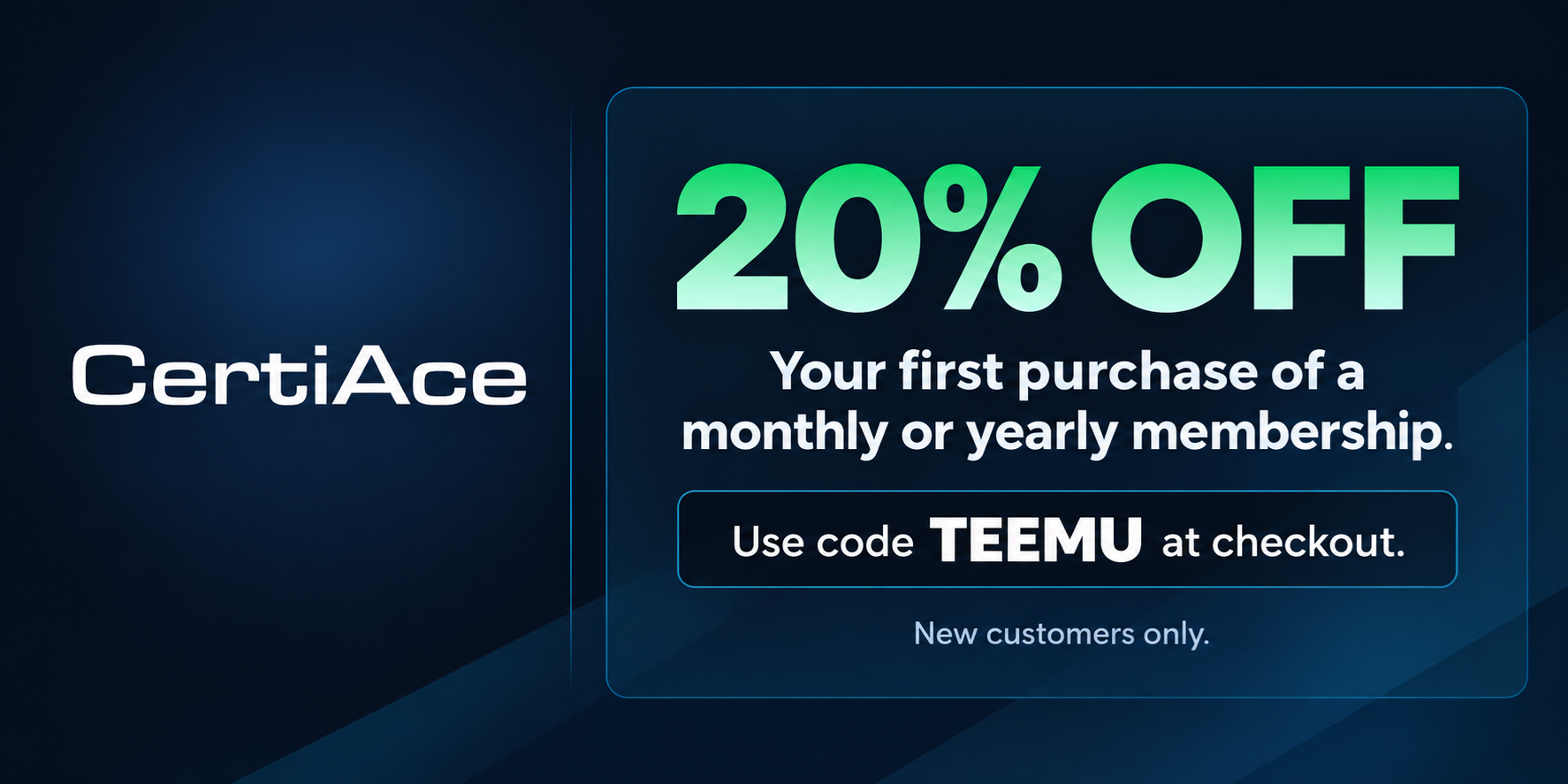
If you’ve been following my content for a while, you may have seen me recommend CertiAce even before this partnership. Now I can also offer you a personal discount code. I may earn a commission from purchases made using the code.
6. Go through the official study guide again
Now is the time to review what you've learned and identify the topics that still need attention. Return to the official DP-600 study guide or your PDF checklist if you chose to use it.
Go through the list again. For each topic, try to explain the fundamental concepts as if you were presenting them to someone else.
- Can you explain the topic in your own words?
- When would this feature or approach be useful?
- What alternatives are available?
Flag the topics that need more practice. That's what you're going to do next.
7. Get hands-on practice in Fabric Forge
You've studied the topics, tested your knowledge, and identified the areas that still need work. Now it's time to actually build things in Microsoft Fabric. The best way to prepare for scenario-based exam questions is to build things yourself.
Join Fabric Forge and use the hands-on exercises to practice working with Fabric features in realistic scenarios.
Fabric Forge focuses on learning by doing. Instead of only studying theory about tools and features, you're required to use them yourself.
Start with exercises in areas you flagged in the previous step. The goal is not to sprint through all the exercises. Instead, focus on what you're doing and why.
You can also revisit the Microsoft Learn exercises or build a small solution of your own. For example, load and transform some data, create a semantic model, write DAX calculations, configure security, and experiment with Direct Lake.
There's no need to build a production-ready end-to-end platform. The important part is getting comfortable actually working inside Fabric.
8. Learn what to expect on exam day
Especially if this is your first Microsoft certification exam, watch this Microsoft Reactor session: Prepare for Exam Day.
Learning the technical content is the most important part of your preparation. However, going into an unfamiliar exam format can still catch you by surprise. You should understand the different question formats, how to manage your time, how to review your answers, and how to effectively use Microsoft Learn.
You can also visit Microsoft's exam sandbox to explore the interface and different question types.
9. Take the official Microsoft Practice Assessment
Finish your preparation with the official Practice Assessment. Scroll down to DP-600 and you'll be able to access the assessment.
I strongly recommend saving this assessment for last. This is the final benchmark, and as close as you can get to the style of real exam questions. The assessment is free, and can be attempted multiple times.
Be advised that the question pool is limited. Repeating the assessment too quickly can turn it into a memory game. After each attempt you should:
- Carefully review wrong answers
- Read the relevant documentation
- Get more practice on topics that still need work
10. Time to take the exam
This is it. You've done the work. You've studied the topics, tested your knowledge, closed the gaps, and gained hands-on experience. Now it's time to take the exam. Trust your preparation and believe in yourself, and you'll do great!
If this guide helped you reach your goal, I'd be happy to hear about it. Feel free to tag me in your LinkedIn post when you pass so I can congratulate you.
Good luck!